

How to Get Rid of Cockroaches in Gurgaon: A Specialist’s Guide to Removal and Prevention
Pest control technician at Termisect Hygiene Solutions, with 15 years of hands-on experience in pest management.
To get rid of cockroaches in a Gurgaon home, you need to do four things together: cut off their food and water, seal the cracks and drains they hide in, place gel bait where they actually live, and keep checking with sticky traps until the traps stay empty. Sprays alone rarely work. They kill the cockroaches you can see and push the rest deeper into walls or next door, where they breed and return.
This guide explains which cockroach you are dealing with, where to find them, what works, what doesn’t, and when it is time to call a professional. It is written for flats, builder floors and villas in Gurugram, where shared drains and ducts make cockroach control a little different from a standalone house.
Book a Free Cockroach Inspection
Cockroach control at a glance
| Question | Short answer |
|---|---|
| What works best at home? | Sanitation, sealing cracks and drains, gel bait placed in hiding spots, and sticky traps to check progress. Together these are called integrated pest management (IPM). |
| Do sprays work? | Only for a quick knockdown. They miss hiding places and can scatter cockroaches into other rooms and flats. |
| How long does gel bait take? | About a week or longer for a clear drop. Heavy infestations need a follow-up after eggs hatch. |
| Can they be removed permanently? | An infestation can be eliminated, but reinfestation is possible through shared drains, neighbouring flats and grocery cartons. Prevention keeps a home clear. |
| When should I call a professional? | When you see cockroaches in daytime, in many rooms, or trap counts don’t fall after two to three weeks of correct baiting. See how our professional cockroach control service works. |
Which cockroach is in your home? Small kitchen roaches vs large drain roaches
Most Gurgaon households deal with two species, and they need different tactics. A survey of homes and food businesses in Varanasi found these same two, the American cockroach (Periplaneta americana) and the German cockroach (Blattella germanica), were the cockroaches infesting kitchens, toilets and living spaces (Wannigama et al., 2014).
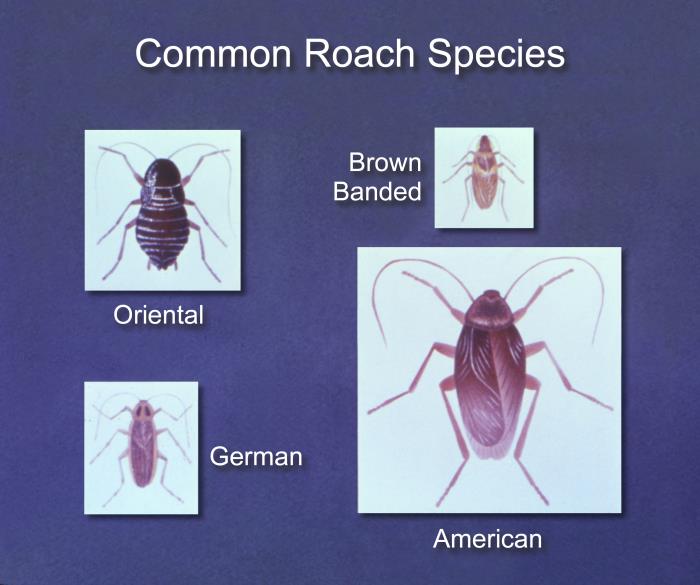
| Small “kitchen” cockroach (German) | Large “drain” cockroach (American) | |
|---|---|---|
| Size and look | About 1.3 cm, light brown, two dark stripes behind the head | About 5 cm, reddish brown, pale band around the edge of the shield behind the head |
| Where it lives | Inside the home: kitchen cabinets, appliance motors, hinges, sink cabinets | Drains, sewers, shafts and ducts; enters through floor traps and pipe gaps |
| How fast it breeds | Fastest of all pest cockroaches; one egg case holds about 30 young | Slower; about 12 young per egg case |
| Main tactic | Gel bait in cracks, sanitation, monitoring | Sealing drains and entry points, plus bait near where they enter |
Source: UC IPM Pest Notes: Cockroaches.
If you see many small, light-brown cockroaches in daylight around the kitchen, assume a German cockroach infestation that is already well established. If you see an occasional large cockroach at night near the bathroom or kitchen drain, the problem is usually entry from the drainage system rather than breeding inside your flat.
Why cockroaches keep entering Gurgaon homes
Cockroaches need only three things: food, water and a tight, dark hiding place. A typical Gurugram flat supplies all three.
- Shared drainage and ducts. In high-rise societies, every flat is connected to the next through plumbing shafts, electrical ducts and drain lines. Large cockroaches travel along these routes, especially where pipe gaps are unsealed or drain water traps are faulty (UC IPM).
- Things carried in. German cockroaches do not walk in from outdoors. They arrive in grocery cartons, second-hand appliances, furniture and moving boxes, often as egg cases (UF/IFAS Extension).
- Kitchen moisture. A dripping tap, a leaking RO outlet, wet sink cabinets or condensation behind the fridge gives cockroaches the water they need to survive.
- Warmth. German cockroaches favour warm, humid spots of roughly 21–24°C, which is why the motor area of a fridge or microwave is a favourite hiding place (UC IPM). Gurgaon’s long summers and humid monsoon suit them well.
How cockroaches survive and multiply indoors
Understanding the life cycle explains why one round of treatment often isn’t enough.
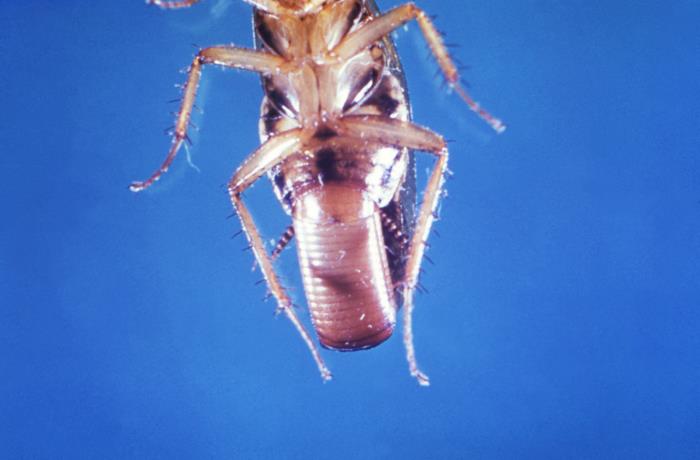
A female German cockroach carries her egg case for most of its roughly 30-day incubation, dropping it only a day or two before the eggs hatch. Each case contains about 30 young, and she can produce a new one every few weeks. University of California entomologists estimate that a single female and her offspring can produce over 30,000 cockroaches in a year (UC IPM). The species goes through three to six generations a year, so a single pregnant female is reason enough to act (UF/IFAS).
Two details matter for treatment. First, females carrying egg cases eat very little and avoid open spaces, so they are often the last to eat a bait. Second, the egg case shields the eggs. This is why a well-planned treatment includes a follow-up after the eggs hatch.
Cockroaches are also a health issue, not only a nuisance. Their droppings, saliva and shed skins contain proteins that trigger allergies and asthma, particularly in children. In a large US study, cockroach allergen levels were highest in high-rise apartments (NIEHS / Inner-City Asthma Study).
Signs of a cockroach infestation in your house
- Droppings: small black specks or dark smears, like ground pepper, along cabinet edges and hinges.
- Shed skins: light-brown, papery casings left behind as young cockroaches grow.
- Egg cases: small capsule-shaped cases in corners, behind appliances or under shelves.
- Smell: a musty, oily odour in closed cabinets.
- Daytime sightings: cockroaches out in daylight usually means hiding places are overcrowded.
Where cockroaches hide: a room-by-room checklist
Adult German cockroaches can squeeze into a crack about 1.5 mm wide, and young ones into even smaller gaps (UC IPM). They prefer spaces where their body touches surfaces above and below. Use a torch at night and check:
| Area | Where to look |
|---|---|
| Kitchen | Cabinet hinges and corners, the gap where the countertop meets the wall, the sink cabinet and pipe entry holes, behind the gas stove, under the chimney, drawer runners |
| Appliances | Fridge motor compartment and rubber door seal, microwave and oven vents, water purifier, mixer-grinder base, dishwasher |
| Bathroom | Floor drain (nahani) traps, the gap around the WC base, behind the geyser, cracks in tile grout, vanity cabinets |
| Utility and balcony | Washing machine area, outlet pipes, stored cartons and newspaper piles |
| Elsewhere | Switchboards, false-ceiling gaps, wardrobe corners and electrical conduits that open into the wall |
Step-by-step: how to get rid of cockroaches at home
Step 1: Monitor first with sticky traps
Place cockroach sticky traps against walls in kitchen corners, inside the sink cabinet, behind the fridge and in the bathroom. Number them and check daily for a few days. The traps with the most catches tell you where the colony is, and comparing counts before and after treatment tells you honestly whether your efforts are working (UC IPM). Sticky traps alone won’t end an infestation; they are your measuring tool.
Step 2: Remove food and water
- Store dal, atta, sugar, biscuits and pet food in airtight glass or plastic containers.
- Do not leave dishes in the sink overnight. Wipe the stove top and slab after cooking.
- Use a dustbin with a tight lid, line it, and empty it every night.
- Fix dripping taps and leaking pipes. Dry the sink cabinet and keep it ventilated.
- Vacuum crumbs from cracks, behind appliances and inside drawer tracks. A HEPA-filter vacuum also picks up droppings and egg cases that cause allergies.
This step also makes baits work better. When cockroaches have no other food, they eat the bait sooner.
Step 3: Seal hiding places and entry points
- Fill cracks along countertops, tiles and cabinet joints with silicone sealant.
- Seal gaps where pipes and cables pass through walls and into cabinets.
- Fit drains with mesh covers or closable traps. Pour water into rarely used bathroom drains every few days so the water seal does not dry out.
- Clear clutter: stacked cartons, old newspapers and paper bags are breeding sites.
Step 4: Use gel bait correctly
Gel bait is the most effective home tool against German cockroaches. Apply small pea-sized dots, not long lines, directly into cracks, hinges and corners where you found droppings or trap catches (UC IPM). Many small dots in many places work better than a few large blobs.
Expect results to take about a week or longer, because bait insecticides are slow-acting by design (UC IPM). Cockroaches that eat it return to their hiding place before dying, where others are exposed. Replace dots that dry out or get eaten. Always read the product label and keep bait out of reach of children and pets.
Step 5: Use dusts only in hidden voids
Boric acid powder can work well when puffed as a thin, almost invisible layer into dry, undisturbed voids: under the fridge, behind kick panels and inside hollow spaces. It loses effect when it gets wet or caked, and it works slowly (UC IPM). It should be applied only where children and pets cannot reach it (NPIC). Never sprinkle it on kitchen slabs or floors, and never mix it into food that a child or pet could find.
Step 6: Re-check after two weeks
Count your trap catches again. If numbers are falling, keep going. If they are not, read the next two sections before buying another product.
Gel bait, sprays, traps and dusts compared
| Method | What it does | Best use | Main limitation |
|---|---|---|---|
| Gel bait | Slow-acting poison eaten by cockroaches, then spread within the hiding place | Kitchen German cockroaches in cracks and hinges | Takes 7+ days; can fail if the population has developed bait aversion |
| Bait stations | Bait inside a closed plastic unit | Homes with small children; under sinks | Must be placed where roaches already walk |
| Aerosol sprays and foggers | Quick knockdown of exposed insects | Not recommended for infestations | Do not reach hiding places; can scatter cockroaches; resistance is common |
| Sticky traps | Catch and count | Monitoring and finding hotspots | Do not control a population |
| Boric acid / dusts | Picked up while walking, ingested while grooming | Dry, hidden voids | Slow; loses effect when wet; keep away from children and pets |
Based on UC IPM Pest Notes: Cockroaches.
University researchers specifically advise against foggers, bombs and aerosol sprays for cockroach infestations. They miss the cracks where cockroaches breed, carry flammability and exposure risks, and may drive cockroaches into other parts of the building (UC IPM). In an apartment block, “other parts of the building” often means your neighbour’s kitchen, and then back into yours.
Home remedies for cockroaches: what the evidence says
Home remedies are popular because they feel safe and cost little. Here is an honest assessment.
| Remedy | Verdict |
|---|---|
| Bay leaves, cucumber peel, neem, peppermint or essential oils | Some plant oils show repellent or toxic effects in laboratory tests at high concentrations, but there is little evidence that a few leaves or a homemade spray will remove an established infestation. At best they push cockroaches elsewhere temporarily. |
| Ultrasonic plug-in repellers | Tested under controlled conditions, three commercial devices failed to repel German cockroaches (Huang & Subramanyam, 2006). Save your money. |
| Baking soda mixtures | Widely shared online, with no reliable evidence of controlling an infestation. |
| Boric acid | The one “home” ingredient that genuinely works, because it is an insecticide. Treat it like one (see Step 5). |
The home measures that genuinely work are the unglamorous ones: cleaning, dry cabinets, sealed food, sealed cracks and closed drains.
Why cockroaches come back after treatment
This is the most common frustration we hear from Gurgaon residents, and there are clear reasons for it.
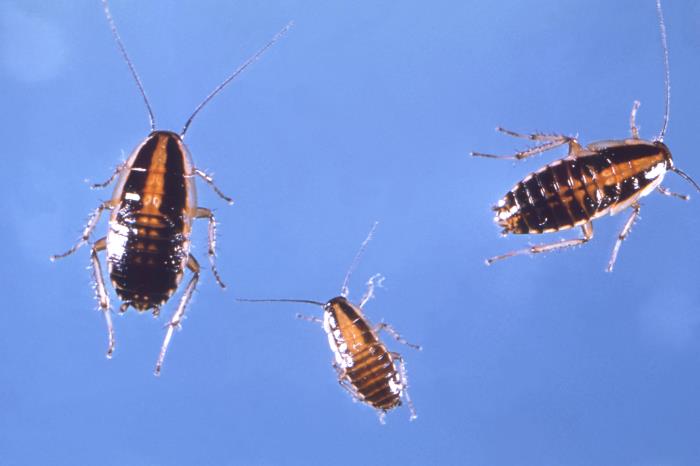
- Eggs survived. Egg cases protect the developing young, and females carrying them feed little. New nymphs can appear two to four weeks after a treatment that looked successful.
- The colony was scattered, not killed. Sprays used on an infestation often move cockroaches into wall voids and adjoining flats.
- Bait aversion. Some German cockroach populations have evolved to taste glucose, a common bait ingredient, as bitter instead of sweet, so they refuse baits containing it (Current Opinion in Insect Science, 2024 review). Using the same gel again and again can select for this.
- Insecticide resistance. A Purdue University field study found German cockroaches developed resistance quickly, sometimes to several insecticide classes at once, and that rotating products only helps when the products used still work on that population (Purdue University, 2019; Scientific Reports).
- Reinfestation from neighbours or shafts. If the flat above, below or next door is infested, or the society’s drains and garbage areas are not managed, cockroaches return through shared routes. US apartment studies show building-wide integrated pest management outperforms treating units one by one (Wang & Bennett, Purdue; Zha et al., 2019).
- Food and water are still available. If crumbs, open bins and wet cabinets remain, cockroaches have less reason to eat the bait.
Common mistakes homeowners make
- Spraying a household insecticide over or near gel bait, which repels cockroaches from the bait.
- Wiping away gel dots during cleaning a day after they are applied.
- Using foggers in a kitchen full of food, utensils and cabinets.
- Mixing different chemicals or using agricultural concentrates indoors, which is unsafe and goes against label directions.
- Stopping after the first week because fewer cockroaches are visible.
- Treating only the kitchen while the bathroom drains remain open.
- Using the same product for months after it has stopped working.
When DIY treatment is not enough
DIY measures can handle an occasional large cockroach from the drain or a small, newly noticed kitchen problem. Consider a professional cockroach treatment when:
- You see cockroaches during the day, or in many rooms.
- Trap counts don’t fall after two to three weeks of correct baiting.
- The infestation is inside appliances, wall voids or false ceilings you cannot reach.
- Someone at home has asthma or allergies, or there is a newborn.
- You are a landlord preparing a flat for new tenants, or the society has a recurring problem across several units.
What to expect from professional cockroach treatment
A good professional treatment follows integrated pest management (IPM): inspect, find the source, reduce food and harbourage, treat precisely, then monitor and follow up. In India, commercial pest control operations using insecticides are licensed under the Insecticides Act, 1968, and products must be registered with the Central Insecticides Board and Registration Committee (Insecticides Rules, 1971). It is reasonable to ask any provider which products they will use and whether they are registered for household use.
At Termisect Hygiene Solutions, a professional pest control company in Gurgaon based in Sushant Lok-1, a cockroach treatment begins with a site inspection to locate hiding places and entry points. Treatment follows our 3S approach:
| Step | What we do |
|---|---|
| Seal | Cracks and crevices are sealed to remove hiding places. |
| Starve | An enzyme-based drain cleaner breaks down the food residue that feeds cockroaches in drains. |
| Sterilise | Gel bait is applied inside closed cabinets, and an odourless spray is used in open areas. |
For gel bait applications, you do not need to leave your home. If spray is used in an area, you will be asked to stay out of it for a short time, and your technician will tell you when it is safe to return. Visible results generally take up to two weeks. Our plans include scheduled follow-up visits, which matter because of the egg cycle described above.
Because Termisect has manufactured pest control formulations in-house for decades, our technicians understand the products they apply, including how to vary treatment when a population stops responding. You can see how the service works on our cockroach control service page.
Still dealing with cockroaches in your Gurgaon home?
Contact Termisect Hygiene Solutions for a professional inspection and a treatment plan suited to your property.
Long-term cockroach prevention tips for Gurgaon homes
No treatment makes a home permanently cockroach-proof. Prevention is what keeps a treated home clear.
| How often | What to do |
|---|---|
| Daily | Clear the sink at night, wipe slabs and stove, empty the dustbin |
| Weekly | Pour water into unused drains, vacuum behind appliances, check the sink cabinet for leaks |
| Monthly | Check sticky traps in two or three hotspots; re-seal any new cracks |
| When anything comes in | Unpack grocery cartons and deliveries outside the kitchen and discard boxes promptly; inspect second-hand appliances and furniture |
| Before monsoon | Fix leaks and check drain covers, since humidity favours cockroaches |
| With your society | Ask the RWA or facility manager about drain-shaft and garbage-area treatment, and coordinate treatment with neighbours if the problem is shared |
Damp corners and leaking pipes that attract cockroaches also attract termites. If you have spotted mud tubes or hollow-sounding wood, read about termite control in Gurgaon as well.
Frequently asked questions
How long does it take to get rid of cockroaches?
With gel bait, most homes see a clear drop within one to two weeks, because bait insecticides act slowly. A heavy German cockroach infestation usually needs a follow-up three to four weeks later to deal with nymphs that hatch from protected egg cases.
How do I get rid of small cockroaches in my kitchen?
Small, light-brown cockroaches in a kitchen are almost always German cockroaches. Remove food and water sources, seal cracks, and place small dots of gel bait in hinges, corners and cracks where you see droppings. Avoid spraying, which scatters them.
Can cockroaches be removed permanently?
An infestation can be eliminated, but no home is permanently protected. In apartments, cockroaches can return through shared drains, ducts and neighbouring units, or arrive in groceries and furniture. Ongoing sanitation, sealing and occasional monitoring are what keep a home clear.
Why do I see more cockroaches right after pest control?
Treatment disturbs cockroaches and some leave their hiding places, often to die. Seeing a few in the first days is common. If numbers are still high after two weeks, ask your provider for a re-inspection.
Is cockroach gel safe for children and pets?
Gel bait contains an insecticide, so it should be placed only in cracks, hinges and closed cabinets out of reach, in small amounts, following the label. This keeps exposure far lower than with sprays. Bait stations add another layer of protection in homes with toddlers or pets.
Do cockroaches come from drains?
Large American cockroaches commonly live in drains and sewers and enter homes through floor traps, damaged pipes and unsealed pipe gaps. Small German cockroaches usually breed inside the home itself.
How often should I get cockroach control done in a Gurgaon apartment?
It depends on the building and your habits. Homes with shared-drain problems or a history of infestation often benefit from scheduled visits every few months, while a well-sealed home with no activity may need treatment only when monitoring shows cockroaches.
The bottom line
The best way to get rid of cockroaches is not one product but a system: identify the species, find where they hide, remove food and water, seal the gaps, bait precisely, and check your results. Sprays and home remedies may make you feel busy, but they rarely end an infestation. If the problem keeps returning, it is usually a sign of eggs, resistance or reinfestation from shared spaces, and that is where professional inspection helps most.
Still dealing with cockroaches in your Gurgaon home?
Contact Termisect Hygiene Solutions for a professional inspection and a treatment plan suited to your property.
Book a Free Cockroach Inspection
Call +91 96673 86387 or +91 96673 85386, or email contact@termisect.com. We are available 8:00 AM to 10:00 PM, seven days a week.